Credits
Every photograph on this site
Licences were checked on each Wikimedia Commons file page on 17 November 2026. CC BY-SA images, if any appear, are used on the website only, and are not placed in the downloadable fact sheets.
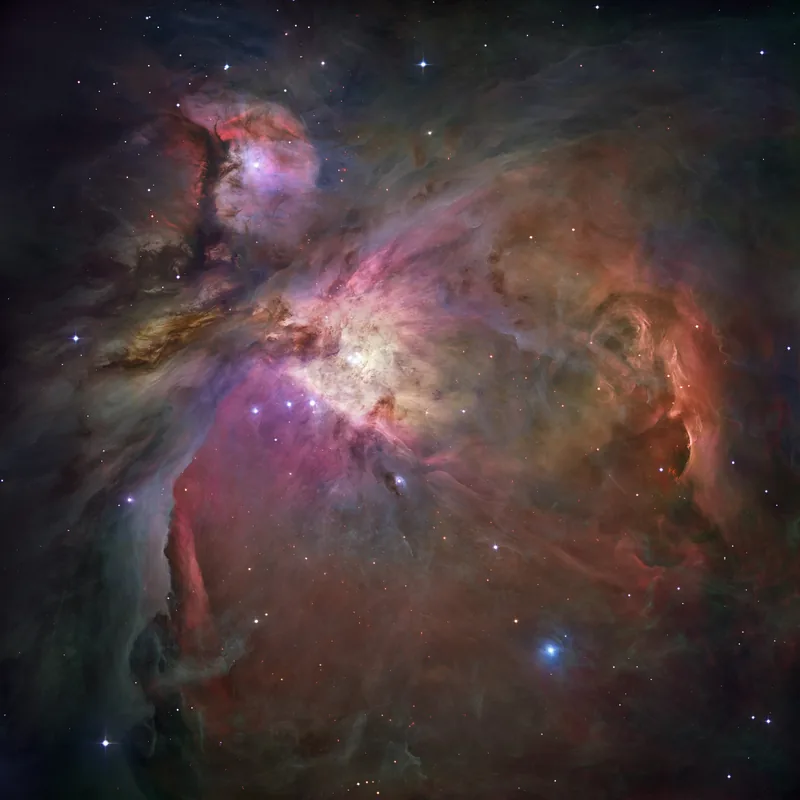
The Orion Nebula, a 2006 Hubble mosaic. NASA, ESA, M. Robberto (STScI/ESA) and the Hubble Space Telescope Orion Treasury Project Team. An official emission-nebula example. U.S. government work in the public domain. Photo: NASA, ESA, M. Robberto (STScI/ESA) and the Hubble Space Telescope Orion Treasury Project Team · Public domain (U.S. government work) · Wikimedia Commons 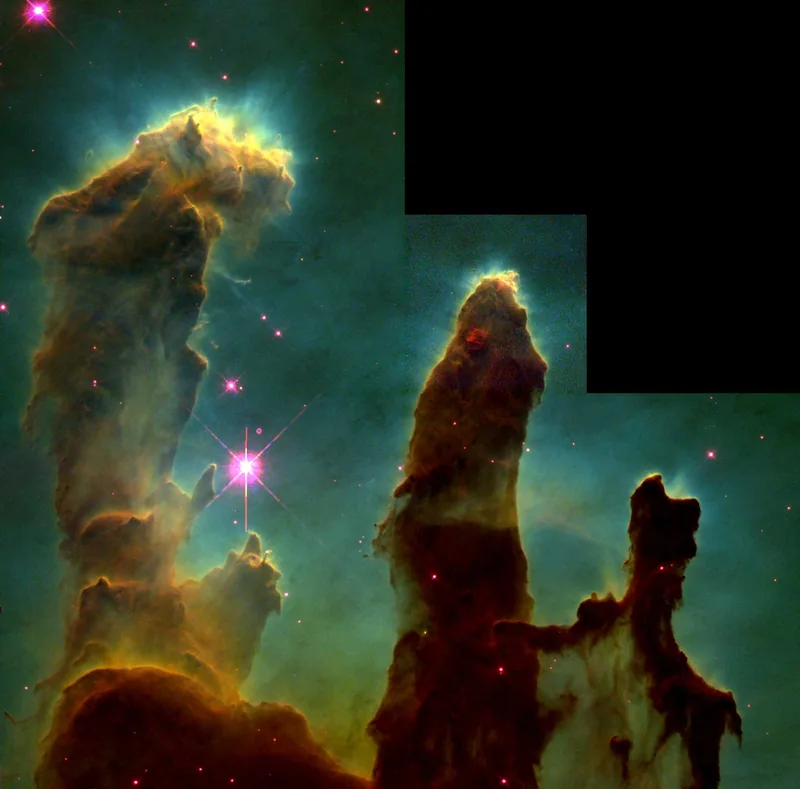
The Pillars of Creation in the Eagle Nebula, a 1995 Hubble WFPC2 mosaic by NASA, Jeff Hester and Paul Scowen. The black rectangle at upper right is the camera’s stairstep detector gap, not a hole in the nebula. U.S. government work in the public domain. Photo: NASA, Jeff Hester and Paul Scowen (Arizona State University), 1995 · Public domain (U.S. government work) · Wikimedia Commons 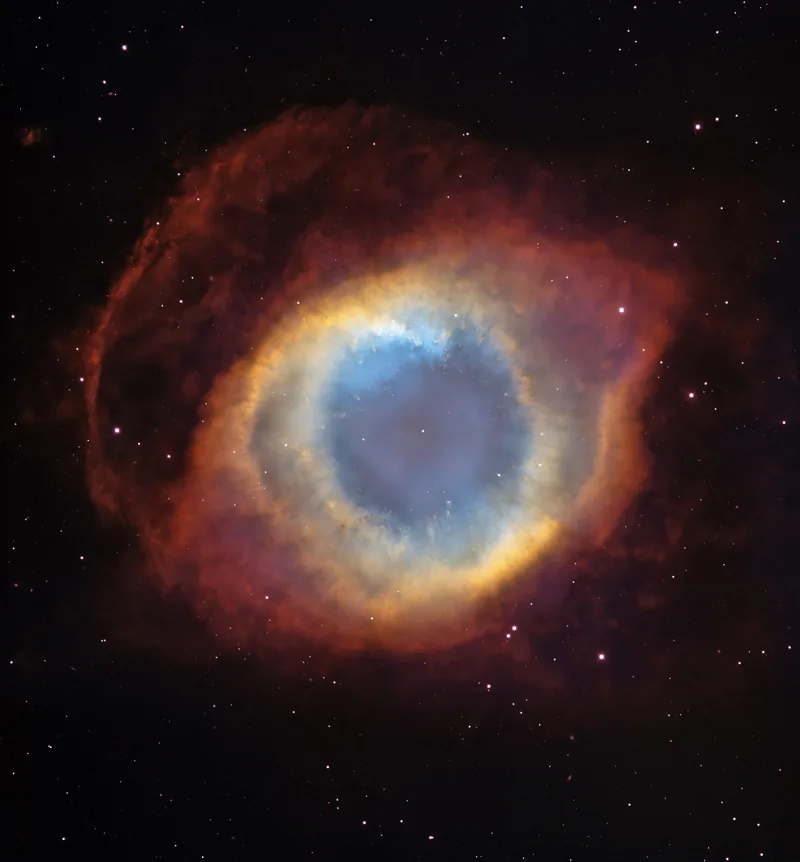
The Helix Nebula (NGC 7293), about 690 light-years away in Aquarius, photographed for Hubble in 2004. NASA, ESA, C.R. O’Dell, M. Meixner and P. McCullough. Official pages describe a trillion-mile-long tunnel of glowing gases with a white dwarf at the centre. This site does not treat “Eye of God” as a fact. U.S. government work in the public domain. Photo: NASA, ESA, C.R. O'Dell (Vanderbilt University), M. Meixner and P. McCullough (STScI) · Public domain (U.S. government work) · Wikimedia Commons 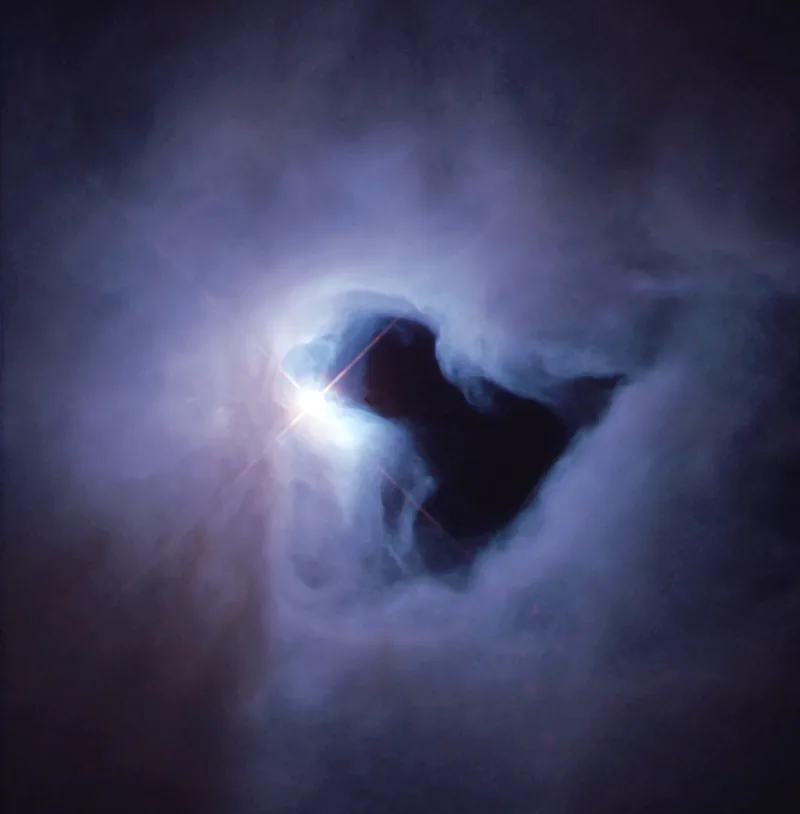
NGC 1999, a reflection nebula in Orion illuminated by V380 Orionis, about 1,500 light-years from Earth. NASA and the Hubble Heritage Team. A later interpretation revised the old idea that the dark shape is a Bok globule; this caption does not repeat that identification as current fact. U.S. government work in the public domain. Photo: NASA and The Hubble Heritage Team (STScI) · Public domain (U.S. government work) · Wikimedia Commons 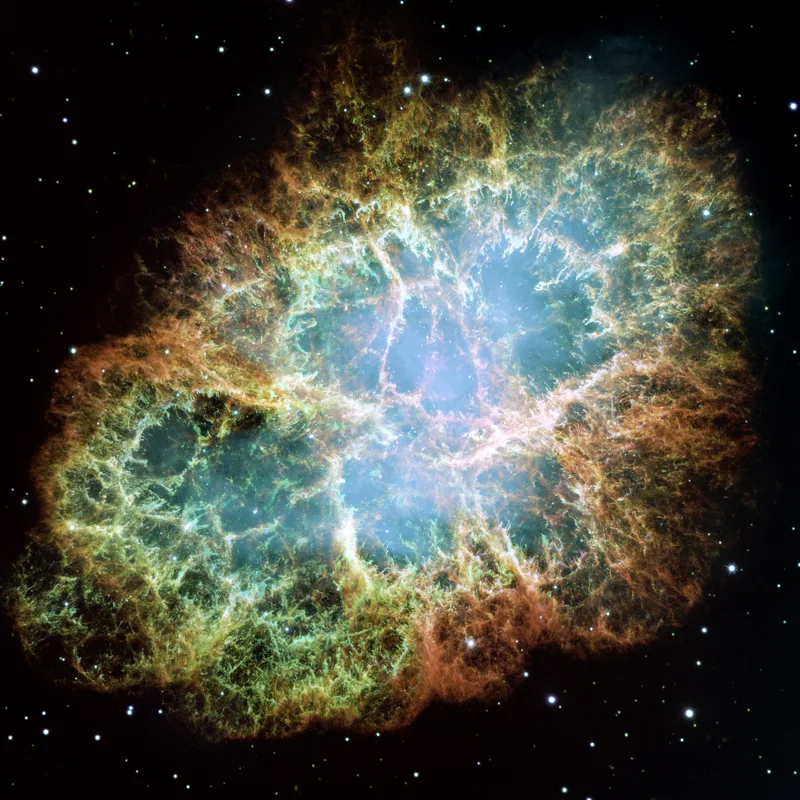
The Crab Nebula, a 2005 Hubble mosaic. NASA, ESA, J. Hester and A. Loll. The official photograph caption describes a six-light-year-wide expanding remnant of the 1054 explosion. U.S. government work in the public domain. Photo: NASA, ESA, J. Hester and A. Loll (Arizona State University), 2005 · Public domain (U.S. government work) · Wikimedia Commons 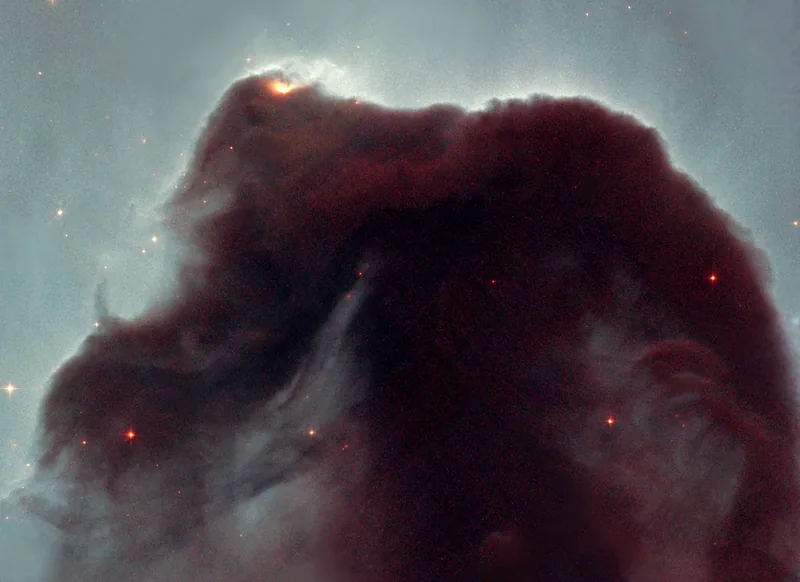
The Horsehead Nebula, also known as Barnard 33, a 2001 Hubble close-up. NASA, NOAO, ESA and the Hubble Heritage Team (STScI/AURA). Used here as a dark, or absorption, nebula. U.S. government work in the public domain. Photo: NASA, NOAO, ESA and The Hubble Heritage Team (STScI/AURA), 2001 · Public domain (U.S. government work) · Wikimedia Commons 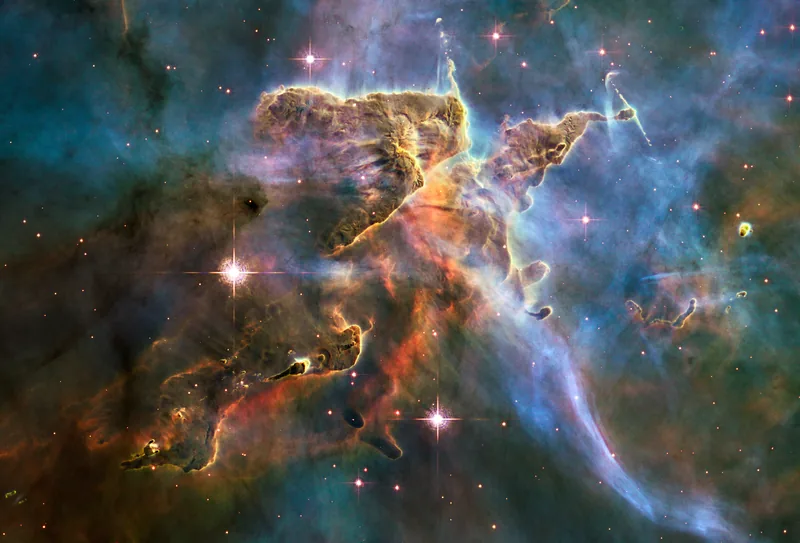
“Landscape” in the Carina Nebula, NASA Goddard still GSFC_20171208_Archive_e002076. U.S. government work in the public domain. Photo: NASA / Goddard Space Flight Center · Public domain (U.S. government work) · NASA Images 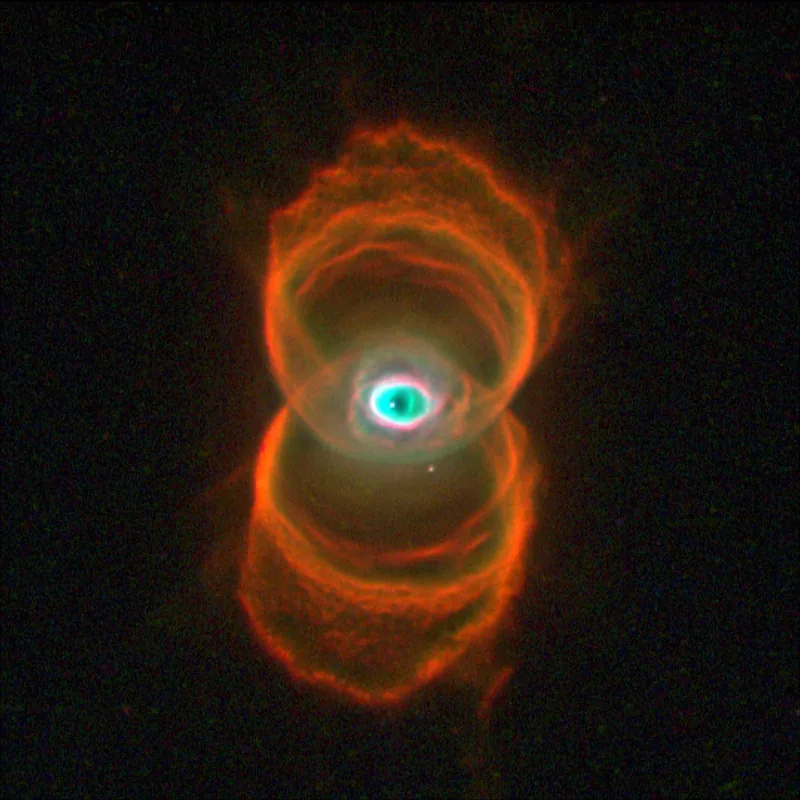
MyCn18, the Hourglass Nebula, a young planetary nebula. NASA still PIA14442. The name is historical; official pages say planetary nebulae have nothing to do with planets. Source width 1,280 pixels, so the site uses 400- and 800-pixel stills only. U.S. government work in the public domain. Photo: NASA · Public domain (U.S. government work) · NASA Images 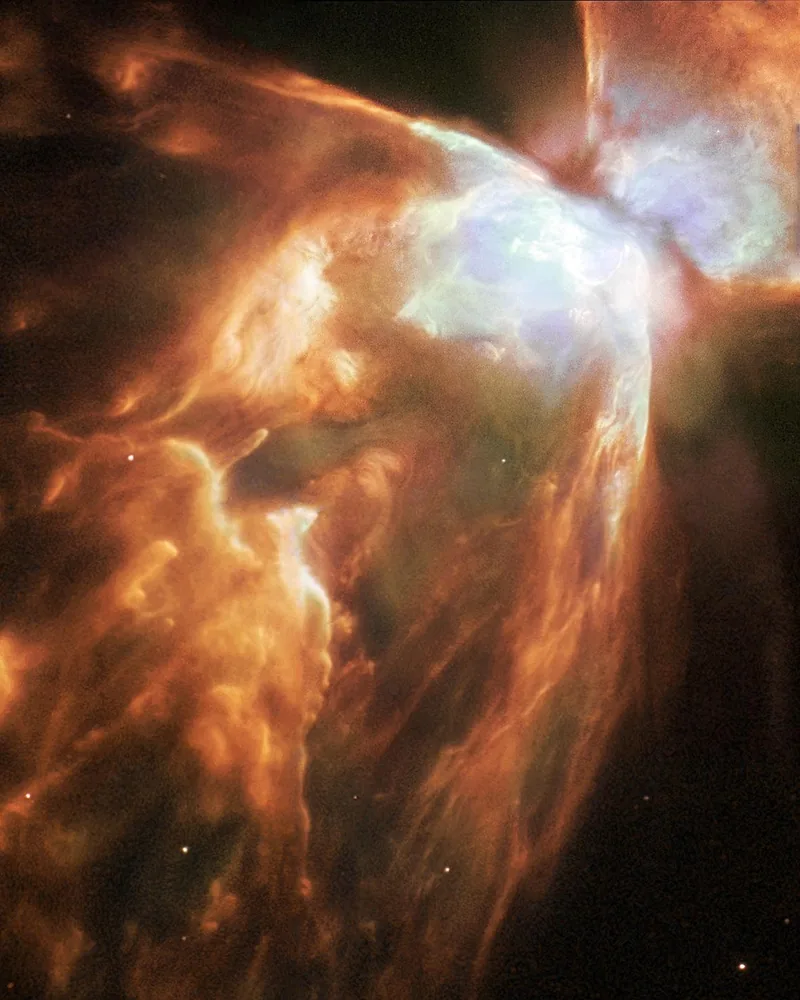
NGC 6302, the Bug Nebula, from a NASA Goddard release dated 3 May 2004 (GSFC_20171208_Archive_e002086). Official NASA wording describes a “blanket of icy hailstones.” Source width under 1,600 pixels, so the site uses 400- and 800-pixel stills only. U.S. government work in the public domain. Photo: NASA / Goddard Space Flight Center, released 3 May 2004 · Public domain (U.S. government work) · NASA Images 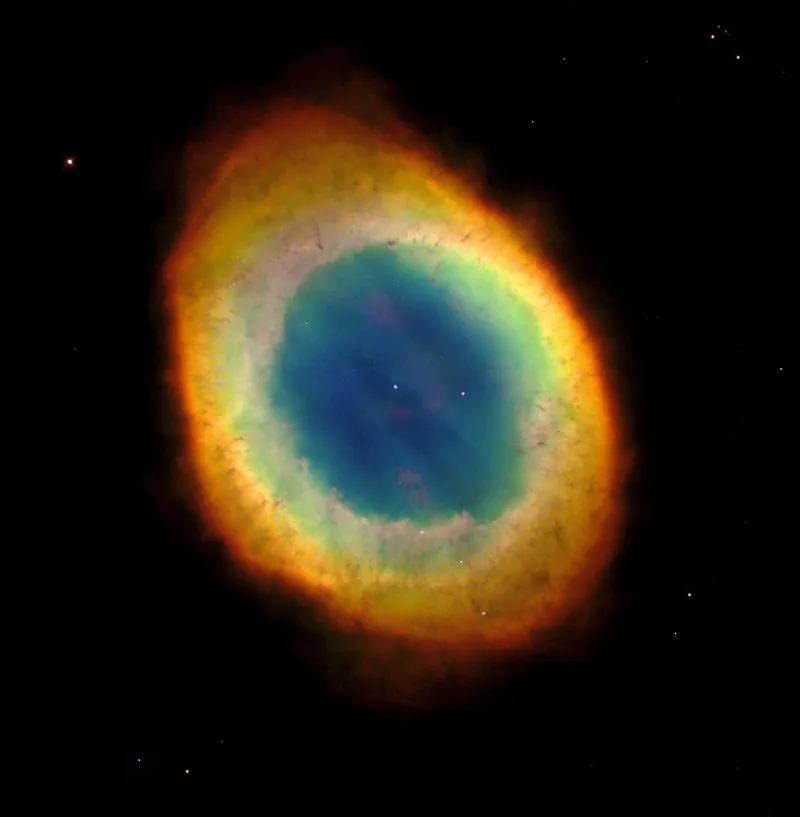
The Ring Nebula (M57), in a Hubble Heritage view NASA titles “Looking Down a Barrel of Gas at a Doomed Star.” The official description calls it “this sharpest view yet of the most famous of all planetary nebulae,” with colours “approximately true colors.” Source width 1,215 pixels, so the site uses 400- and 800-pixel stills only. U.S. government work in the public domain. Photo: NASA / JPL-Caltech / ESA, the Hubble Heritage Team (STScI/AURA) · Public domain (U.S. government work) · NASA Images 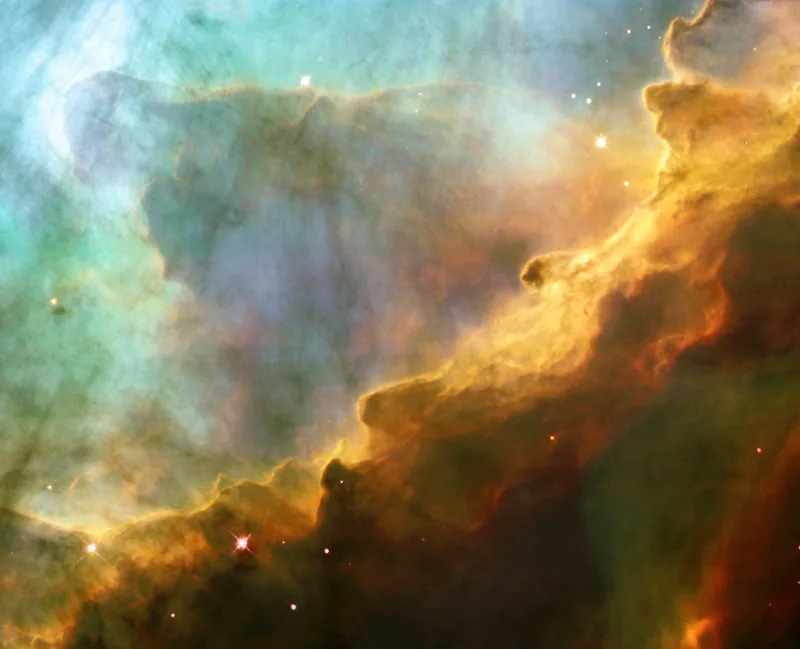
The Omega Nebula (M17), also known as the Swan Nebula, a Hubble photograph dated 29 May 1999. NASA says it is a hotbed of newly born stars 5,500 light-years away in Sagittarius, sculpted by ultraviolet radiation from young massive stars outside the frame to the upper left. U.S. government work in the public domain. Photo: NASA, Hubble Space Telescope, 1999 · Public domain (U.S. government work) · NASA Images 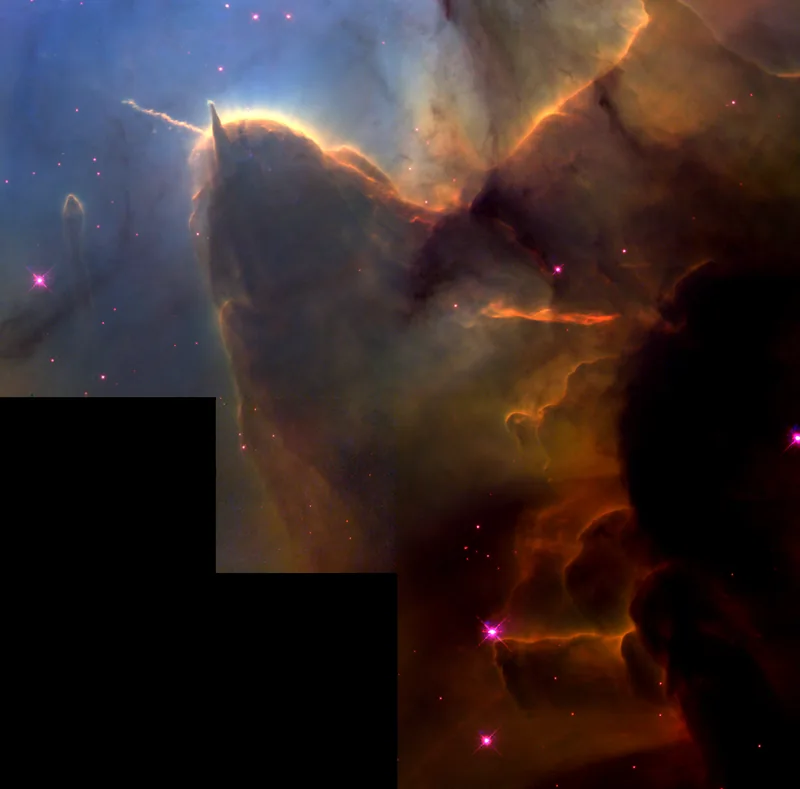
The Trifid Nebula, a Hubble photograph dated 8 September 1997. NASA says this stellar nursery in Sagittarius is about 9,000 light-years from Earth, and that a nearby massive star is tearing a cloud of dust and gas — about 8 light-years from the nebula’s central star — apart. U.S. government work in the public domain. Photo: NASA, Hubble Space Telescope, 1997 · Public domain (U.S. government work) · NASA Images
Enjoyed this nebula desk?
No pop-ups. No intrusive advertising. Just interesting stuff. A little support helps the next galaxies.im site get built.