Planetary nebulae
A name that stuck, and a trillion-mile tunnel
“Some of the fuzzy objects resembled planets, and these earned the name “planetary nebulae.”” Today, NASA’s Hubble nebulae page says, “these nebulae keep the name, but we know they have nothing to do with planets.”[source]
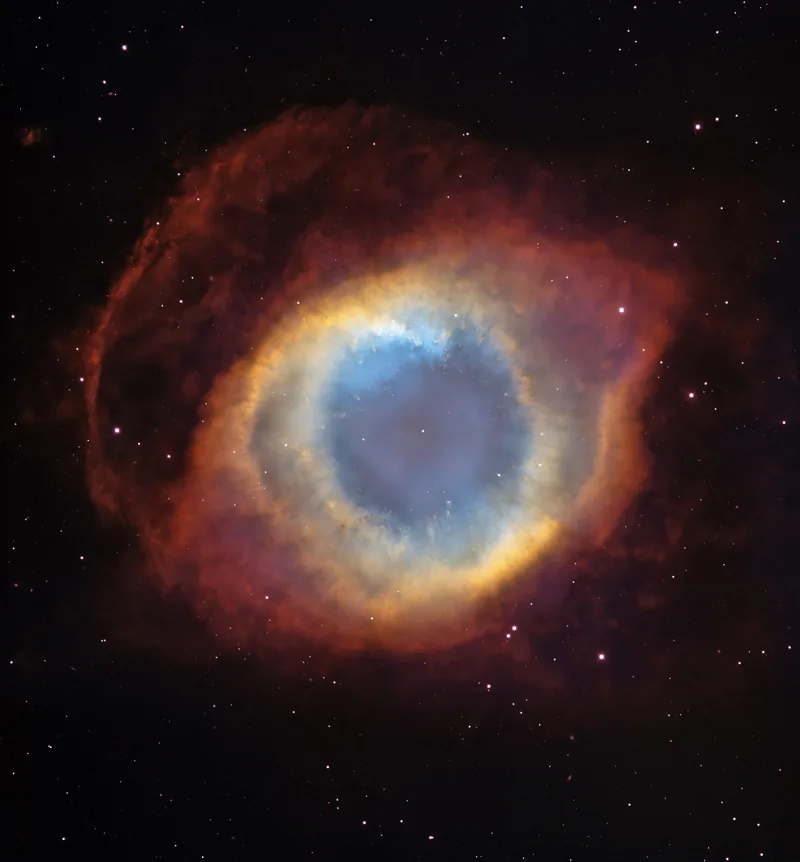
They form “during the death of low-mass to medium-mass stars. When such stars die, they expel their outer layers into space. These expanding shells of gas form a huge variety of unique shapes – rings, hourglasses, rectangles, and more – that show the complexity of stellar death. Astronomers are still studying how these intricate shapes form at the end of a star’s life.”[source]
The Helix is the official example on that page. “Though it looks like a bubble or eye from Earth’s point of view, the Helix is actually a trillion-mile-long tunnel of glowing gases. In its center lies a white dwarf star.”[source] The photograph on this page is a 2004 Hubble still of NGC 7293, about 690 light-years away in Aquarius. This site describes that official appearance. It does not treat the nickname “Eye of God” as a fact.
“As the star casts off its outer layers, it leaves behind its core, which becomes a white dwarf star. White dwarf stars are objects with the approximate mass of the Sun but the size of the Earth, making them one of the densest forms of matter in the universe after black holes and neutron stars. The white dwarf star’s ultraviolet radiation ionizes the gas of the planetary nebula and causes it to glow, just as stars do in emission nebulae. Our Sun is expected to form a planetary nebula at the end of its life.”[source]
NASA’s decoding page puts the same last act in a longer story. “Did you know our Sun got its start in a stellar nursery? Over 4.5 billion years ago, some gas and dust in a nebula clumped together due to gravity, and a baby Sun was born. The process to form a baby star itself can take a million years or more!” Later, “our Sun will eventually puff into a huge red giant star before leaving behind a beautiful planetary nebula,” along with “a small, dense object called a white dwarf that will cool down very slowly. In fact, we don’t think the universe is old enough yet for any white dwarfs to have cooled down completely.”[source]
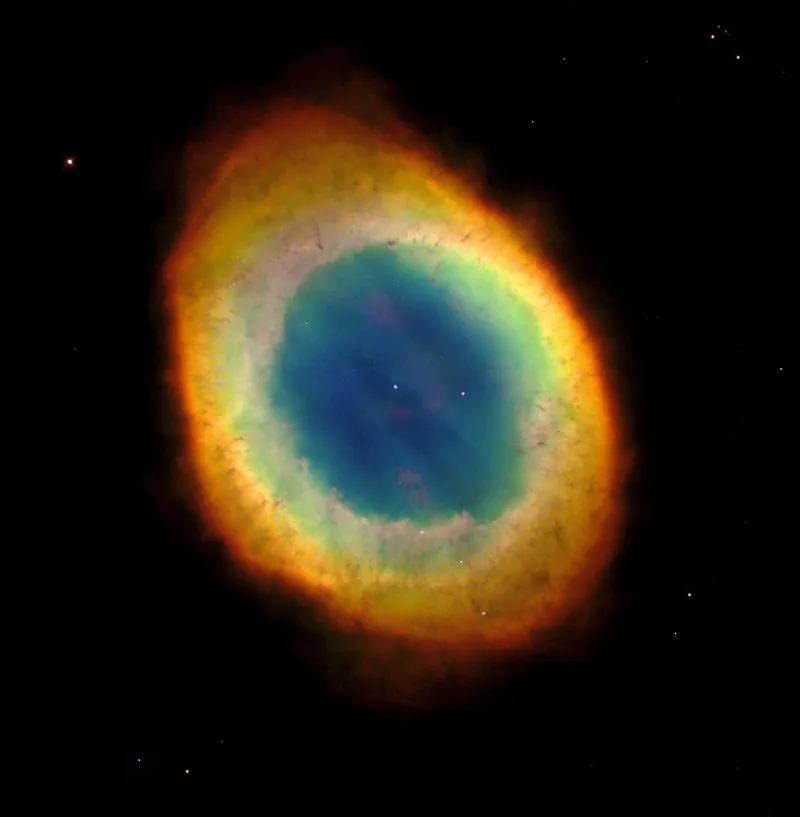
The Ring Nebula, M57, is “the most famous of all planetary nebulae,” in the words of a Hubble Heritage still NASA titles “Looking Down a Barrel of Gas at a Doomed Star.” The official description says the colours are “approximately true colors.” You are looking, almost, down the tunnel.
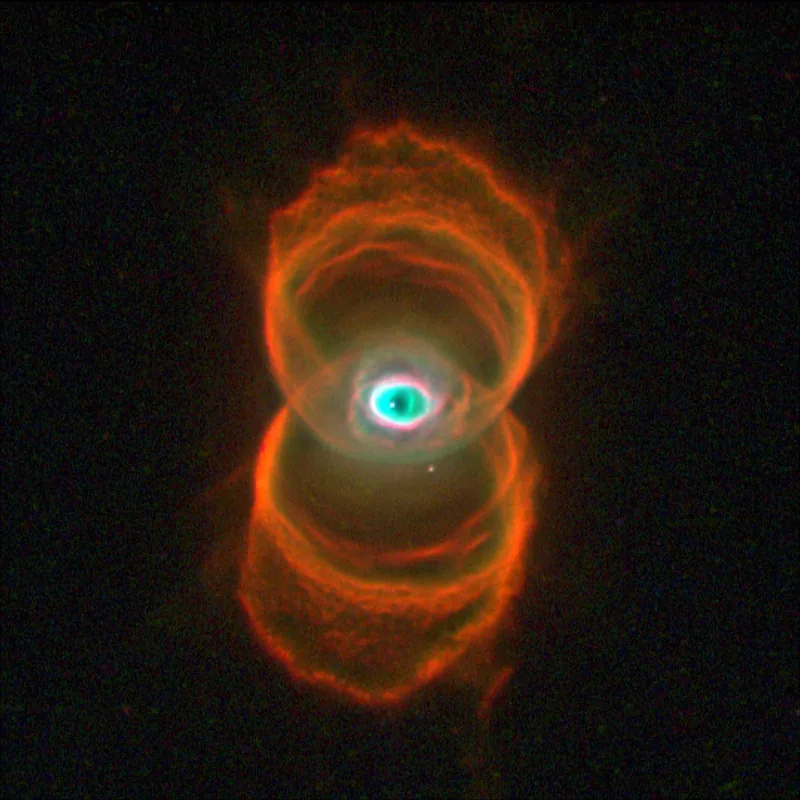
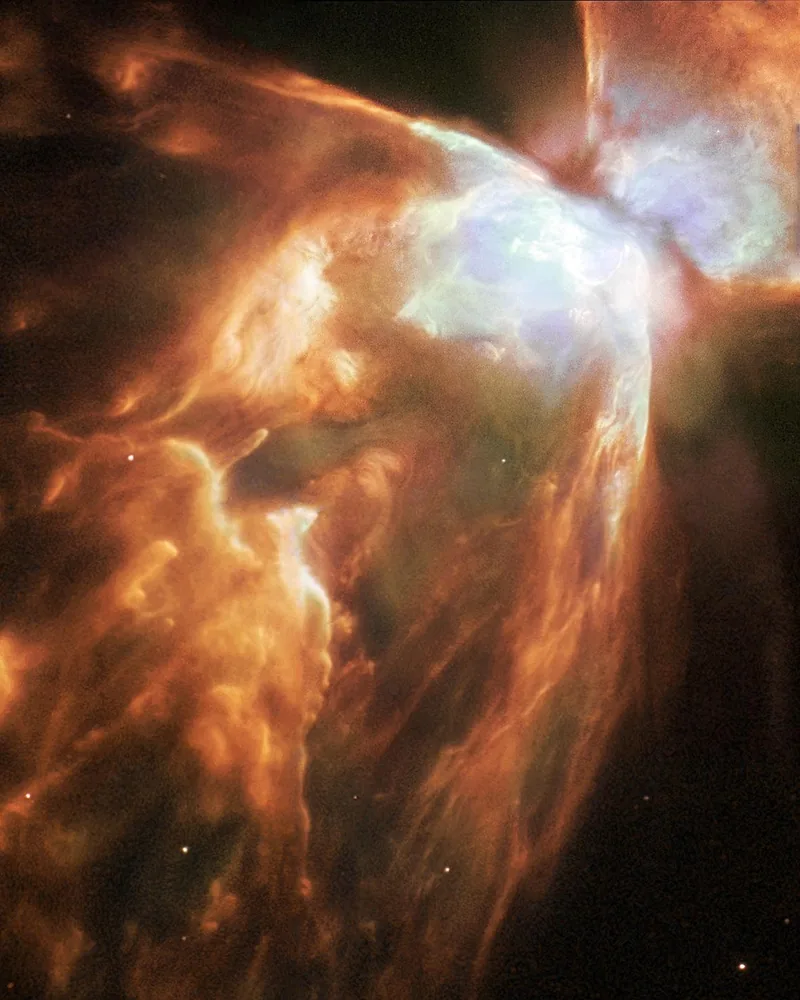
Hourglasses are among the official shapes. MyCn18, the Hourglass Nebula, is a young planetary nebula in NASA still PIA14442. NGC 6302, the Bug Nebula, appears in a Goddard release dated 3 May 2004, with official wording about a “blanket of icy hailstones.” Both are dying-star shells that keep a historical name.
Enjoyed this nebula desk?
No pop-ups. No intrusive advertising. Just interesting stuff. A little support helps the next galaxies.im site get built.